

7 Loyalty Program Tips That Actually Work for Small Businesses
Practical tips for running a loyalty program that keeps customers coming back. Reward design, frequency, promotion, and common mistakes independent business owners make.
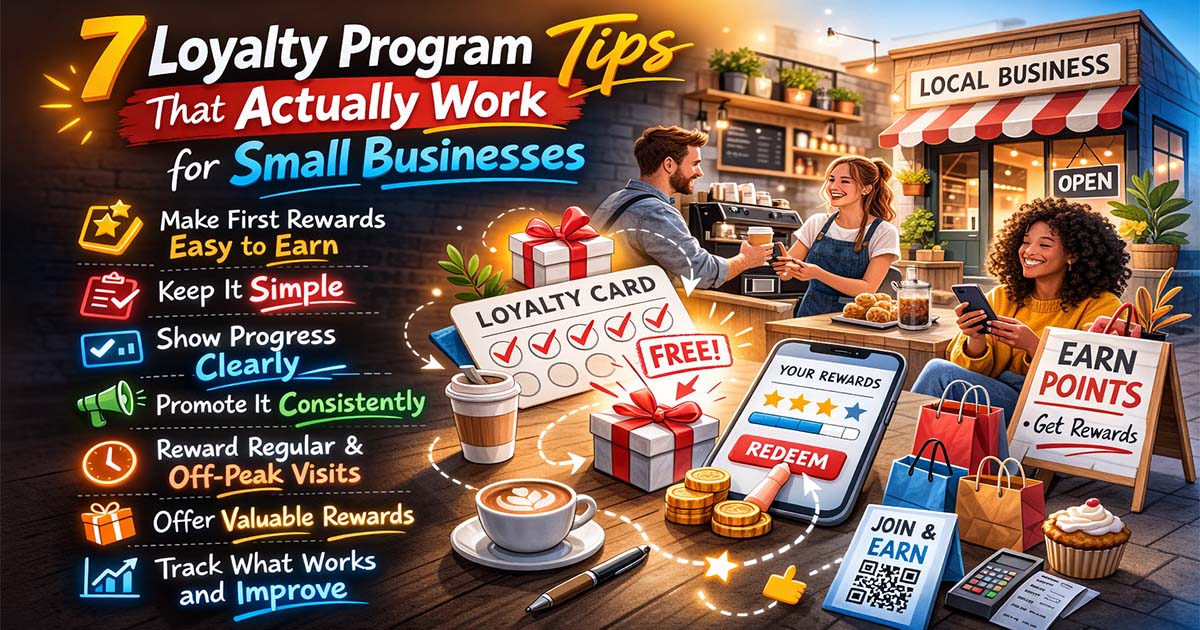
A loyalty program is only as good as how it is run. The technical setup is the easy part. What separates a program that drives real repeat business from one that customers forget about comes down to a handful of practical decisions made upfront and maintained consistently.
Here are seven tips for small business owners who want their loyalty program to actually work.
1. Make the First Reward Feel Achievable
The most common mistake in loyalty program design is setting the first reward too far away. If a customer needs to spend two hundred dollars before earning a five-dollar discount, the program feels pointless before it even starts.
The first milestone should be reachable within three to five visits for a typical customer. That first reward is the proof of concept. It shows the customer that the program delivers on its promise and that their loyalty is genuinely valued. Once they have redeemed once, they are far more likely to keep going.
For a coffee shop with a five-dollar average ticket, a ten-stamp card with a free drink reward is the right range. For a barbershop at thirty dollars a visit, a five or six visit milestone makes sense. Match the threshold to your actual customer behavior, not to your ideal margin scenario.
2. Keep the Rules Simple
Complexity kills participation. If a customer needs to read three paragraphs to understand how your loyalty program works, most of them will not bother.
The best programs can be explained in one sentence. "Buy nine coffees, get the tenth free." "Earn one point per dollar spent. Redeem fifty points for a free service." That is it.
Every exception, special condition, and asterisk you add is a reason for a customer to feel confused or deceived when the program does not work the way they expected. Simple programs get used. Complex programs get ignored.
3. Make Progress Visible
Customers need to be able to see where they stand at any time. Hidden progress is one of the fastest ways to kill engagement with a loyalty program.
With a digital stamp card, customers can open their card and immediately see how many stamps they have. With a points program, their balance should be visible and updated in real time after each transaction. The visual confirmation of progress is part of what makes the next visit feel motivated.
This is one reason paper punch cards still work for some businesses. The physical card in their wallet is a constant reminder of where they stand. Digital programs need to replicate that immediate visibility.
4. Promote It Consistently, Not Just at Launch
Many small businesses set up a loyalty program, announce it once, and then stop talking about it. Enrollment drops off within weeks and the program becomes background noise.
Your loyalty program should be mentioned at every transaction. Train your staff to mention it at the register. Put a sign at the point of sale. Include it in your social media posts. Reference it in any email communication you send.
New customers do not know your program exists unless you tell them. Existing customers who signed up months ago may have forgotten. Consistent, low-pressure promotion is what keeps enrollment growing and keeps active participants engaged.
5. Use It to Drive Off-Peak Visits
Loyalty programs are one of the most effective tools for smoothing out slow periods. A double-point day on Tuesday. Bonus stamps during the afternoon lull. A birthday voucher that needs to be redeemed within the month.
These targeted incentives give customers who are flexible a reason to shift their timing. They fill seats and appointment slots that would otherwise be empty without discounting your core pricing across the board.
A mid-week promotion built into your loyalty program is worth more to your business than a general discount because it attracts the customers who already like you, rather than discount-seekers who may never return at full price.
6. Tie Rewards to What You Actually Want to Sell
If you want customers to try a specific product or service, build it into the loyalty reward. A coffee shop that wants to move a new specialty drink can offer double stamps for orders of that item. A salon that wants to promote a new treatment can make it a redemption option.
Your loyalty program is a promotional tool, not just a cost center. Use it strategically to drive behavior that benefits the business, not just to reward behavior that would have happened anyway.
7. Measure What Is Actually Working
At a minimum, you should know your enrollment rate, your active participation rate, and your redemption rate. Enrollment tells you how many customers are joining. Active participation tells you how many are actually using the program. Redemption tells you how many are making it all the way to a reward.
If enrollment is high but active participation is low, the program is not being promoted at the point of sale. If participation is high but redemption is low, your reward threshold may be set too high.
These numbers do not require a spreadsheet to track. A quick monthly review of where your program stands is enough to catch problems before they become habits.
Getting Your Program Set Up Right
PerkHit works with independent businesses across the Central Valley to set up simple loyalty programs that cover all of these basics from day one. Points cards, stamp cards, and digital vouchers with clear rules, visible progress, and no app required from your customers.
If you are starting from scratch or want to revisit a program that is not working as well as it should, reach out here or explore the options by business type.
Frequently Asked Questions About Running a Loyalty Program
How long does it take to see results from a loyalty program? Most businesses see measurable increases in return visit frequency within sixty to ninety days of a well-promoted program launch. The key variable is staff consistently mentioning the program at the point of sale.
What is the ideal reward threshold for a coffee shop loyalty program? A buy-nine-get-one-free structure is the most common and most effective format for coffee shops. It is simple to understand, achievable within a few weeks of regular visits, and the reward is directly tied to the product the customer already loves.
Should I offer a sign-up bonus for joining my loyalty program? A small welcome offer, such as a free drink on the first visit after signup or a ten-percent discount on the next purchase, can meaningfully increase enrollment rates. It gives customers an immediate reason to join rather than putting it off.
How do I get more customers to actually enroll in my loyalty program? The single most effective tactic is staff asking at the register. "Do you have our loyalty card?" asked at every transaction outperforms any amount of signage or social media promotion. Train your team to make it a consistent part of the checkout process.
Running a loyalty program and have a question about how to make it work better? We are easy to reach.
Want loyalty rewards for your business?
Simple, affordable digital rewards that keep customers coming back. Points, stamps, vouchers. No app required.